
Being on Google News Does Not Mean It's True
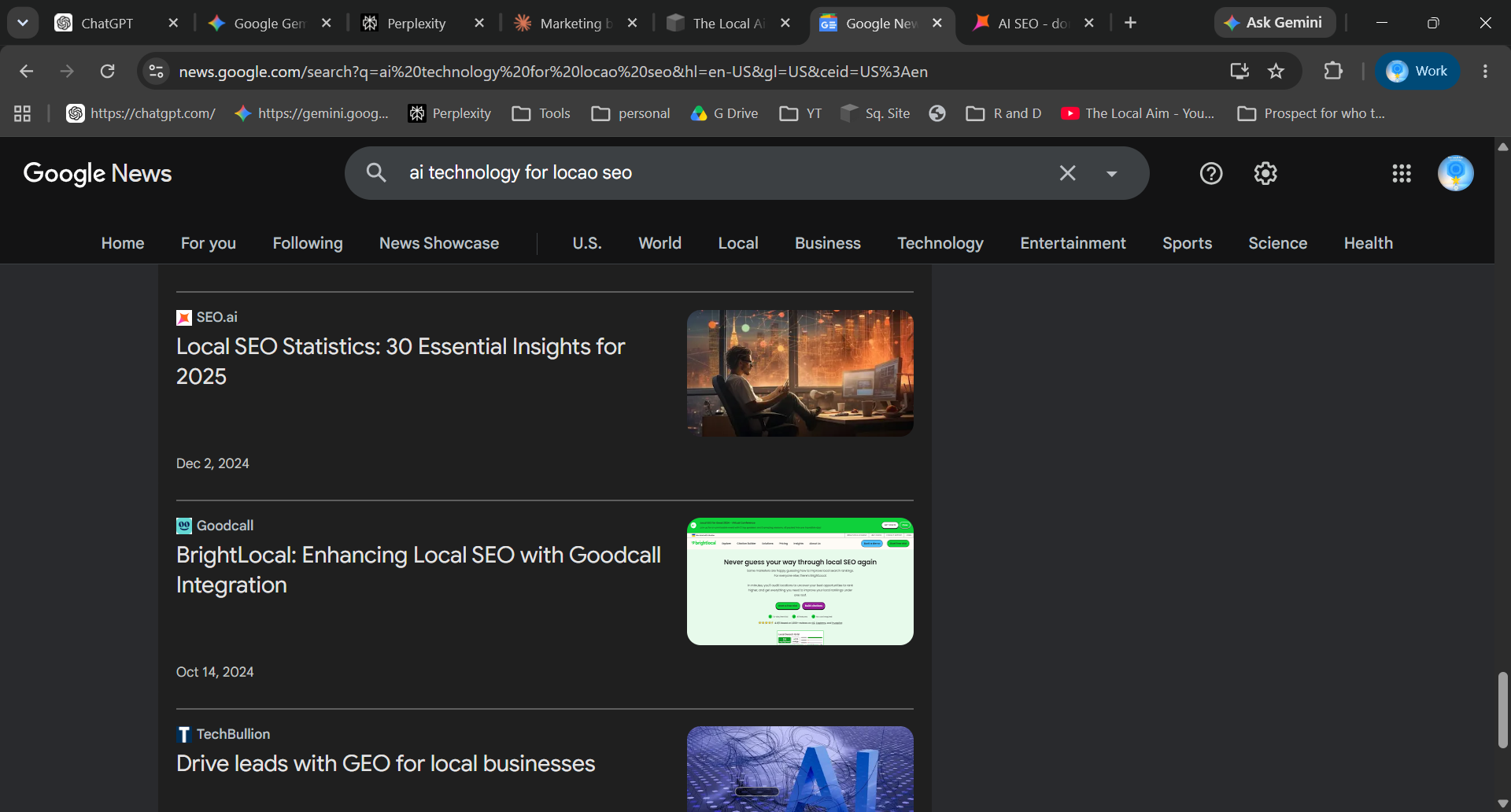
We want to show you something I saw on a screen this week.
It's going to change how you read a news feed.
Search "AI technology for local SEO" on Google News. One of the first results is a statistics article published by SEO.ai — a company selling a $149 AI content tool. The article is titled "Local SEO Statistics: 30 Essential Insights for 2025." It sits in the same feed as articles from actual news organizations. Same format. Same layout. Same implied credibility.
Google did not write that article. Google did not fact-check it. Google did not verify the statistics inside it.
Google indexed it because the site met the technical requirements to appear in Google News — and the algorithm served it to anyone searching that topic.
The business owner who clicks it has no way to know the difference.
How Google News actually works
Google News is not a newsroom.
It is an aggregator. The platform relies on automated crawling and machine learning to identify content that meets its technical and formatting standards. There is no editorial team reading articles before they appear. Eligibility is determined algorithmically, not by application or human review. JksdigitalSearch Engine Land
What earns a site a place in Google News has nothing to do with whether the content is accurate.
It has to do with whether the site publishes consistently, uses proper article formatting, has author bylines, and follows Google's technical guidelines.
A vendor that publishes two blog posts a week on its own domain can meet every one of those criteria.
The result is a feed that looks like journalism and functions like a content marketing channel.
The vendor content loop
Here is the specific sequence the screenshot revealed.
SEO.ai sells an AI content writing tool for $149 a month. SEO.ai publishes a statistics article on its own website titled "Local SEO Statistics: 30 Essential Insights for 2025." That article gets indexed by Google News.
A business owner searches for information about AI and local SEO.
The article appears in their news feed alongside legitimate publications.
The business owner reads the statistics, treats them as industry facts, and may make purchasing decisions — including potentially buying SEO.ai — based on numbers the vendor chose, framed, and published with no independent verification.
The vendor, the marketer is not just selling a product. They are manufacturing the research environment that makes the product look necessary.
We reviewed the statistics category these articles typically contain in an earlier desk review this week. Unverifiable conversion rates. ROI claims traced to a single vendor-funded survey with no disclosed methodology. Numbers that have circulated through SEO blogs for years with no original source attached. The article on Google News carries none of those disclosures. It reads as industry fact. That is the design.
This is not a Google failure. It is a feature being exploited.
Google News was built to surface timely, topically relevant content quickly. It does that well. The problem is not the platform — it is the assumption the platform creates in the reader's mind.
The Google News logo is a trust signal. The layout mimics journalism. The placement next to wire service articles implies equivalence.
None of that equivalence exists. Getting approved as a Google News publisher requires consistent publishing and original content — which is the core business of media companies, but is also achievable by any vendor willing to maintain a content operation. Thousands of vendor sites meet that bar. Coveragepush
Try and not be fooled.
The reader does not know any of this. The reader sees Google News and thinks: Google checked this.
What to look at before you trust a news result
The publication name appears above every Google News result. That name is the only piece of information that tells you who is speaking. Before you read the statistics, before you absorb the recommendations, look at the name above the headline and ask one question: does this publisher sell something related to what this article is about?
SEO.ai selling an article about local SEO statistics is the same conflict of interest as a supplement company publishing research on why supplements work.
The publication format does not change the incentive. Google News placement does not change the incentive. The incentive is: the content exists to serve the vendor's sales process.
That is not automatically false. Vendor-published content can contain accurate information. The problem is that it cannot be trusted to tell you what the research actually shows when the research conflicts with the sale. And you have no way to know which version you are reading.
Google News is a distribution channel. It was never a fact-checker. The logo just made it look like one.
R&D by humans and technology. Every source linked. Every claim desk-verified. That is the standard here.